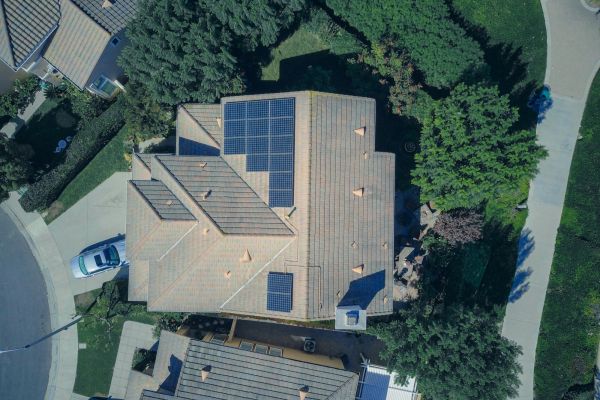
Australia’s residential electrification is advancing rapidly, with rooftop photovoltaic systems (PVs) accounting for 11.2% of the country’s total electricity supply1. The increase in mid-day electricity generation from solar, coupled with the continuing peak in evening consumption, suggests that feed-in tariffs may become less relevant, while the demand for energy storage solutions or innovative energy trading models are likely to rise.
Electric vehicles (EVs), which are also experiencing rapid market growth2, offer great emerging opportunities to absorb excess mid-day generation and balance the temporal mismatch between generation and demand. This is because the large batteries in EVs can serve as flexible energy storage, while discharging technologies enable Vehicle-to-Home (V2H) and Vehicle-to-Grid (V2G) capabilities. These capabilities allow EV owners to better utilise PV systems, manage electricity consumption, and participate in energy trading without being constrained by time or location.
This project investigates how EV adoption will influence residential electricity management while exploring the role of emerging bidirectional charging technologies and innovative business models (such as V2H/V2G and platform-based marketplaces) in maximising user benefits.
The research will employ a mixed methods approach, combing qualitative inductive analysis of focus group discussions with quantitative modelling of online questionnaire data. We will collect data from car owners (EV and non-EV) living in different types of dwellings (houses and apartments) with and without residential PVs to understand daily choices and preferences regarding electricity use, interest in selling excess solar electricity in a platform marketplace and engaging in V2H/V2G. The outcomes will include important knowledge to guide policies and novel service models to facilitate a user-centred renewable energy transition.
This project is funded by the University of Melbourne’s Melbourne Energy Institute 2024 Seed Grant and approved by the University of Melbourne Human Research Ethics Committee (Ethics ID 2024-30851-59707-3).
1Clean Energy Council (2023). Clean Energy Australia Report 2023.
2Electric Vehicle Council (2023). State of Electric Vehicles
Our team
Dr Patricia Sauri Lavieri (team lead) is a Senior Lecturer in Transport Engineering in the Department of Infrastructure Engineering, FEIT, and a Melbourne Energy Institute research fellow. Dr. Lavieri is leading the project conceptualisation and management.
Dr Joyce Zhang is a Senior Lecturer in the School of Mathematics and Statistics and will provide expertise in optimization methods informed by the empirical data gathered in this project research.
Haohan Xu is a PhD candidate at FEIT, investigating the impacts of EV charging and discharging behaviours on travel patterns and residential energy self-consumption.
Isrrah Malabanan is a PhD candidate at FEIT, who is investigating human-centred approaches to improve EV charging access.
Contact us
If you wish to collaborate and be involved in the project, please email us and a member of our team will reply to you shortly.